Introduction
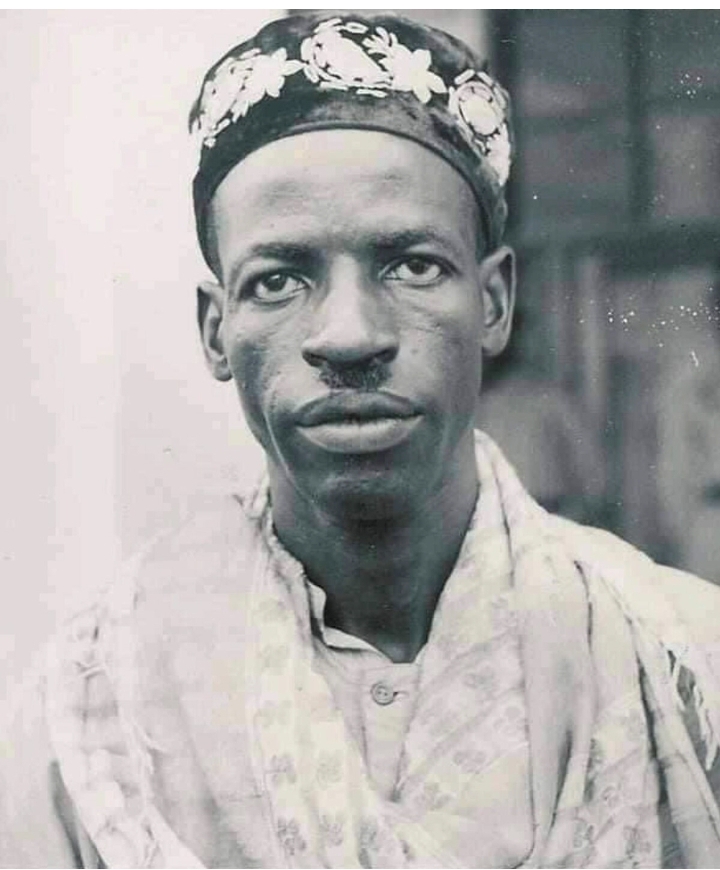
Sa'adu Zungur was a prominent Nigerian poet, political activist, and nationalist who played a significant role in the movement toward Nigerian independence. Born in 1914 in Bauchi, Northern Nigeria, Zungur emerged as one of the most influential literary and political voices of his generation. His works and activism bridged the cultural and political divides between Northern and Southern Nigeria, advocating for unity, education, and social reform. Despite his relatively short life—he passed away at the age of 44—Zungur left an indelible mark on Nigerian literature and politics.
Early Life and Education
Sa'adu Zungur was born in 1914 in Bauchi, a city in northeastern Nigeria. He hailed from a modest family but showed exceptional intellectual promise from a young age. His early education followed the traditional Islamic system, where he learned to read and write in Arabic and studied the Quran. This foundation in Islamic studies would later influence his literary works, which often incorporated Islamic themes and motifs.
Zungur's thirst for knowledge led him to pursue Western education, which was still relatively uncommon in Northern Nigeria at the time. He attended Bauchi Provincial School, where he excelled academically. His performance earned him a scholarship to attend Katsina Training College, one of the premier institutions in Northern Nigeria during the colonial era. At Katsina, Zungur was exposed to a broader curriculum that included English literature, history, and science, which expanded his intellectual horizons and shaped his worldview.
After completing his studies at Katsina, Zungur became a teacher, a profession that allowed him to influence the next generation of Northern Nigerian leaders. However, his intellectual curiosity and passion for social justice soon drew him into the political arena. He recognized that education was not just about personal advancement but also a tool for societal transformation—a theme that would recur throughout his literary and political career.
Political Activism
Sa'adu Zungur's political activism began in the 1940s, a period of growing nationalist sentiment across Nigeria. He was deeply concerned about the political, social, and economic disparities between Northern and Southern Nigeria, as well as the region's overall development within the colonial framework. Zungur believed that Northern Nigeria needed to catch up with the South in terms of education and political engagement to ensure a unified and prosperous post-colonial Nigeria.
Northern Elements Progressive Union (NEPU)
Zungur was a founding member of the Northern Elements Progressive Union (NEPU), the first political party in Northern Nigeria to advocate for radical social and political reform. NEPU was established in 1950 with the aim of challenging the conservative Northern aristocracy and promoting the interests of the common people. Zungur's intellectual contributions were instrumental in shaping the party's ideology, which emphasized education, social justice, and anti-colonialism.
As the party's secretary, Zungur used his literary skills to draft pamphlets, speeches, and articles that articulated NEPU's vision. He was a fierce critic of the indirect rule system, which he believed perpetuated the power of traditional elites at the expense of the masses. His writings and speeches often called for greater political awareness among Northerners and urged them to participate actively in the movement for independence.
Collaboration with Southern Nationalists
One of Zungur's most significant contributions to Nigerian nationalism was his effort to bridge the gap between Northern and Southern activists. At a time when regionalism threatened to divide the country, Zungur advocated for a unified Nigerian identity. He collaborated with Southern nationalists like Nnamdi Azikiwe and Obafemi Awolowo, recognizing that independence could only be achieved through collective action.
Zungur's ability to navigate both Northern and Southern political landscapes made him a unique and valuable figure in the nationalist movement. He attended pan-Nigerian conferences and worked tirelessly to ensure that Northern voices were included in the broader discourse on independence. His efforts helped to foster a sense of national unity that transcended regional and ethnic divisions.
Literary Contributions
Sa'adu Zungur was not only a political activist but also a gifted poet and writer. His literary works reflected his deep commitment to social justice, education, and national unity. Writing primarily in Hausa, he used poetry as a medium to express his political ideas and to connect with ordinary Nigerians.
Poetry with Purpose
Zungur's poetry was characterized by its clarity, passion, and moral urgency. He often wrote about themes such as the importance of education, the evils of colonialism, and the need for social reform. His poems were accessible to a wide audience, making them effective tools for political mobilization. One of his most famous poems, "Waƙar Bahar Arewa" (Song of the Northern Region), called on Northerners to awaken to the challenges of modernity and to actively participate in the political process.
In addition to his political poetry, Zungur also wrote on religious and philosophical themes. His Islamic upbringing informed his perspective on morality and justice, and he often drew on Islamic teachings to support his arguments for social change. This blend of religious and political discourse resonated deeply with his Northern Nigerian audience.
Prose and Journalism
Beyond poetry, Zungur was a prolific writer of prose. He contributed articles to various newspapers and magazines, both in Northern and Southern Nigeria. His writings covered a wide range of topics, including education, politics, and social commentary. Through his journalism, he reached an even broader audience and helped to shape public opinion on critical issues.
Zungur's literary style was direct and persuasive, avoiding unnecessary ornamentation in favor of clear and compelling arguments. He believed that literature should serve a practical purpose—to educate, inspire, and mobilize people toward positive change. This utilitarian approach to writing set him apart from many of his contemporaries who focused more on artistic expression than social impact.
Role in Nigerian Independence
Sa'adu Zungur played a pivotal role in the Nigerian independence movement, particularly in ensuring that Northern Nigeria was an active participant in the struggle for self-determination. At a time when many Northerners were hesitant to engage with nationalist politics, Zungur worked tirelessly to promote political awareness and activism in the region.
Advocate for Northern Inclusion
Zungur was deeply concerned that Northern Nigeria might be left behind in the move toward independence due to its relatively slower pace of political development compared to the South. He argued that Northerners needed to embrace Western education and political engagement to secure their place in a future independent Nigeria. Through his writings and speeches, he encouraged Northern youth to pursue education and to participate in the political process.
Zungur's advocacy extended beyond mere rhetoric. He was actively involved in organizing political rallies, establishing youth groups, and creating educational programs aimed at raising political consciousness in the North. His efforts contributed significantly to the growth of nationalist sentiment in the region and helped to ensure that Northern Nigeria was well-represented in the independence negotiations.
Constitutional Conferences and Negotiations
Zungur participated in several constitutional conferences and negotiations leading up to Nigeria's independence in 1960. He was a strong proponent of a federal system of government that would balance regional autonomy with national unity. His insights and recommendations were valued by both Northern and Southern leaders, and he played a key role in shaping the constitutional framework of independent Nigeria.
Despite his declining health in the later years of his life, Zungur remained committed to the cause of independence. He continued to write and advise political leaders until his death in 1958, just two years before Nigeria gained its independence. Although he did not live to see the fruits of his labor, his contributions were instrumental in paving the way for a unified and independent Nigeria.
Legacy and Relevance Today
Sa'adu Zungur's legacy endures in contemporary Nigeria, where he is remembered as a pioneering nationalist, a passionate advocate for education, and a talented poet. His life and work continue to inspire new generations of Nigerians who are committed to social justice, national unity, and political progress.
Educational Impact
Zungur's emphasis on education as a tool for empowerment remains highly relevant today. He believed that education was the key to overcoming poverty, ignorance, and political marginalization—a message that resonates strongly in modern Nigeria, where access to quality education remains a challenge for many. Several schools and institutions in Northern Nigeria have been named in his honor, reflecting his enduring influence on the educational landscape.
Political Influence
In the political realm, Zungur's advocacy for unity and inclusion continues to serve as a model for contemporary leaders. His ability to bridge regional and ethnic divides offers valuable lessons for today's politicians, who often grapple with similar challenges. Zungur's vision of a Nigeria where all regions and ethnic groups work together for the common good is as relevant now as it was during the struggle for independence.
Literary Recognition
As a writer, Zungur is celebrated for his contribution to Hausa literature and his use of poetry as a vehicle for social change. His works are studied in schools and universities, where they are appreciated for their artistic merit and historical significance. Scholars of African literature recognize Zungur as an important figure in the development of modern Hausa poetry and political writing.
Today, as Nigeria continues to navigate complex political, social, and economic challenges, the life and work of Sa'adu Zungur serve as a powerful reminder of the importance of courage, integrity, and commitment to the greater good. His story encourages Nigerians to remain engaged in the pursuit of a more just, united, and prosperous society.